How to Remember a Sermon
If you have ever been moved by a message on Sunday and could not recall a single point of it by Wednesday, you already know the problem. Learning how to remember a sermon is not about having a better memory. It is about working with how memory actually behaves, and giving yourself something to come back to. Here are six ways to keep a message past midweek: five are habits anyone can start this Sunday, and the last one quietly makes the other five easier.
Why do we forget sermons so fast?
The forgetting is not a personal failing, it is how brains work. The Ebbinghaus forgetting curve shows a steep drop in the first day after we learn something, then a slower fade after that. A sermon is dozens of ideas delivered once, out loud, with no chance to rewind. Under those conditions, losing most of it by midweek is the normal outcome, not the exception.
The good news is that the same research points to the fix. Memory responds to two things above all: revisiting the material, and connecting it to something concrete. Every method below is really one of those two ideas in a different coat.
Six ways to make a sermon stick
1. Review it while it is still warm
The habit that pays off most is a short review within 24 hours. On Sunday afternoon, take five minutes to recall the main point, the key verse, and the one application. This single pass flattens the steepest part of the forgetting curve and moves the message from short-term to something more durable.
Do it from memory first, then check your notes. The small effort of recalling before rereading is what does the strengthening. Reading alone feels like remembering, but it is mostly recognition.
2. Space out your returns
Spaced repetition takes the Sunday review further. Revisit the same sermon a few days later, then a week later. Each return trip strengthens the memory. You do not need an elaborate system. A quick reread of your notes or the summary on the way to the next Sunday is enough.
3. Anchor the message to its verses
Scripture is the backbone of a sermon, and it is also the most memorable part because it is fixed text you can return to word for word. When you tie your memory of a message to the verses it was built on, you get a set of anchors. Recall the verse and the point often comes back with it.
This is why keeping the exact references matters more than paraphrasing. A list of the verses a pastor preached from is a map back into the whole message, long after the delivery has faded.
4. Teach it to someone
Explaining a sermon to a friend, a spouse, or a small group forces you to reconstruct it, and reconstruction is one of the strongest memory tools there is. If you can say what the message was about and why it mattered in three sentences, it has taken root.
This is hard to do from fragments. It is easy to do when you have a clean summary and the takeaways in front of you to build from.
5. Act on one point this week
Nothing fixes a message in memory like doing what it asked. Pick one concrete action from the sermon, small enough to finish by Friday: a call to make, a habit to start, an apology to offer. Acting on a point rehearses it in the most durable way there is, because now the message is attached to something that happened in your week, not just something you heard.
6. Keep a record you can actually return to
Every method above assumes you have something to come back to, and this is where most people quietly fail. Fragments scribbled in a bulletin margin cannot support a Wednesday review or a three-sentence retelling. If you keep a recording or a transcript of the message, review stops being limited to whatever you managed to catch in the moment. The full sermon is there, so the habits above finally have material to work with.
Let the app remember the sermon for you
Sunday Notes AI turns every message into something you can actually return to. After you record, the app produces an AI summary with the main points and key takeaways, so the review step takes a minute instead of an act of willpower. The forgetting curve loses most of its power when the message is one tap away.
Because every sermon is saved with its summary and its verses, remembering becomes searching. A message from three months ago is a quick search, not a fading impression. You get to keep what moved you instead of watching it slip away by Wednesday.
Get the app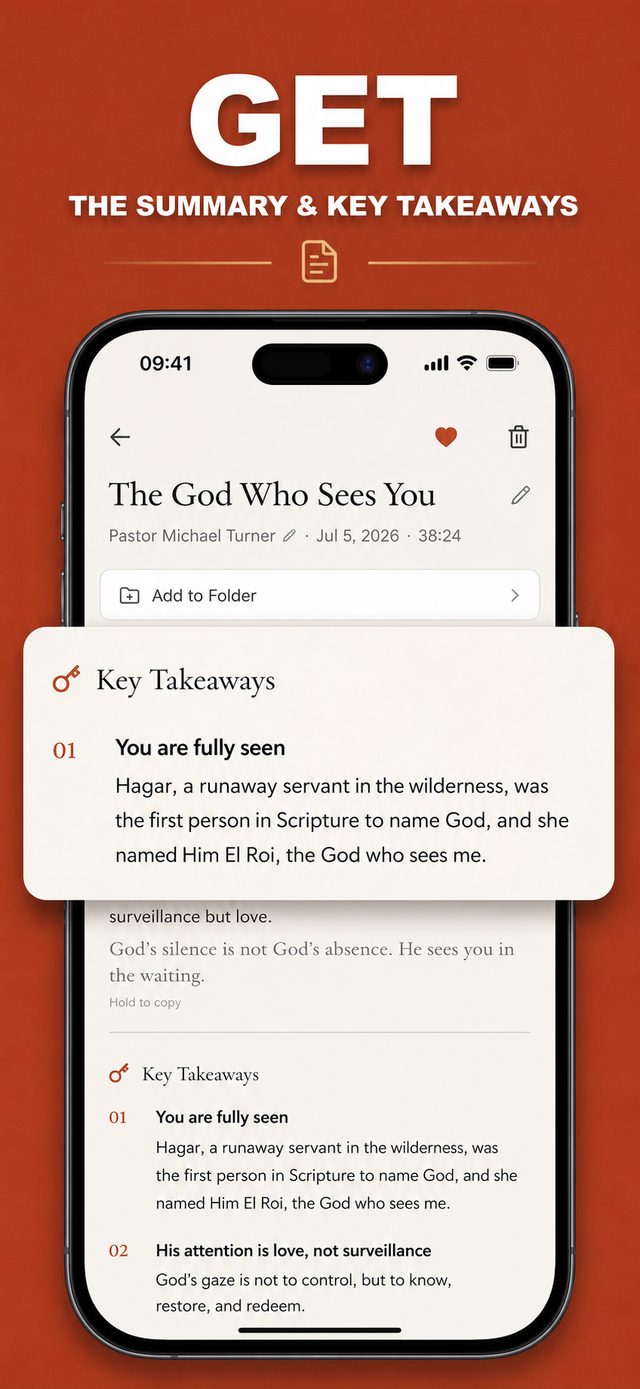
Common questions
How long does it take to forget a sermon?
Research on memory shows the steepest drop happens within the first day, and most unreviewed material is gone within a week. A short review on Sunday afternoon is the single most effective way to slow that fade.
Does writing notes help me remember?
Yes, because writing forces you to condense and revisit the material, both of which strengthen memory. Reviewing those notes later matters even more than making them. Notes you never reopen do little for recall.
What is the best way to review a sermon?
Reread your summary and verses within a day, then again a few days later. Explaining the message to someone else is even stronger, because reconstructing it from memory locks it in far better than rereading alone.
Why do I forget sermons so quickly?
It is not a personal failing, it is how memory works. A sermon is dozens of ideas delivered once, out loud, with no chance to rewind. Without review, most of it fades within a day. A short revisit and a set of verses to anchor the message are what make it stick.
Keep reading
More guides that go with this one: how to take notes during a sermon, digital sermon journal, sermon summary generator. Or head back to the Sunday Notes AI home page to see how the whole app fits together.